
In 1947, at the age of 10, I went away to my prep school Akeley Wood, near Buckingham. In retrospect it was a wonderful time, though as I was the sort of boy — perhaps the sort of person — that does not fit well into any corporate existence, I did not perhaps enjoy it as much as I might have done. It has been fashionable for much of my lifetime to decry prep school experience and to say how barbaric it is to send children away at the age of 10. I disagree. Even though I was among those who did not fully fit in, I still on the whole enjoyed myself. Indeed given who I was, indeed who I am, I think I had a very good time there.


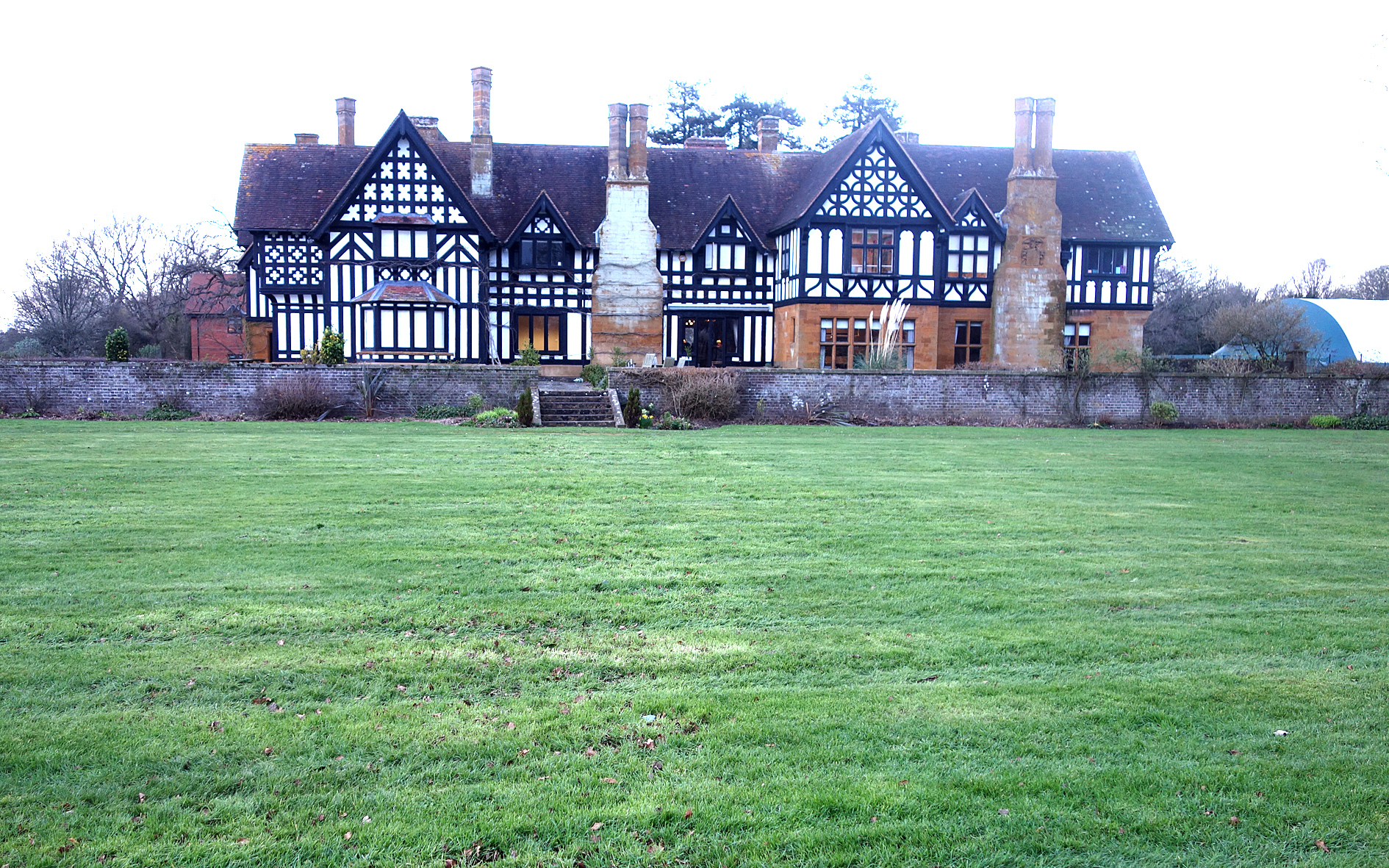
Akeley Wood was originally a hunting lodge to the Stowe estates of the Dukes of Buckingham. It was a half timbered house, rather rambling, with plenty of rooms for dormitories and school rooms. But it was surrounded by acres and acres of grounds where we had a wonderful time. In the centre was the sports field where I must admit I did not exactly in excel myself. Then to one side were grounds with a large rhododendron bush — large enough to be a jungle in which we could explore. Adjacent to it was the camping ground where in the summer we used to erect our tents and if we were lucky we would be allowed to sleep out. I always enjoyed this and seem to remember on sleeping outside under canvas for much of the summer.
And then on the other side of the playing fields were the wild lands a whole acreage of scrubland where as Boy Scouts, or rather Cubs, we were encouraged to have dens, small clearings where we had one could make a fire — in proper Boy Scouts style without using paper and only two matches; and when the fire was properly alight, one could roast potatoes in it. It was a wonderful experience and I spent many happy weekends in the den of my ‘six’ roasting potatoes.Frank reminds me that we also made ‘dampers’ – that is flour mixed with water, twisted round a stick and roasted. Delicious!
Out-of-school activities
When I was in the Scouts/Cubs, one of the tasks was to earn badges, and there was a badge which involved recognising six different types of tree. I realised this was a very easy badge to collect because there was, I suspect there still is, a wonderful collection of exotic trees at Akeley Wood which must have been planted by a tree lover in the 19th or early 20th century. I did some research and discovered the names of six trees and I then tutored the others and this became an easy badge to collect.
Another out-of-school activity was when one of the masters set up a potter’s wheel and taught us how to make pots. I was never very good with my hands, but I eagerly made a couple of pots which were duly fired even though they were not very good. But it was a very useful experience for me, for as an archaeologist I am constantly dealing with pottery and that was the only opportunity I have ever had to do practical potting.
Perhaps the most bizarre episode of all is when I went out shooting. I don’t think we realised it at the time, but I think that a lot of the young masters must have been lads in their early 20s, spending time before, during, or after University and Akeley offered them board and lodgings and the opportunity to be adventurous. Anyway, one of these young masters had a shotgun, and took our class out into the woods to shoot crows or rooks. This was not my sort of thing at all; it wasn’t that I was against shooting – I suppose I am a traditionalist in this way – but it just wasn’t and isn’t me. Anyway, I went along and we were all given a turn with his 12-bore shotgun. When my turn came, I was terrified: these shotguns had quite a kick and in any case, I was never very good at spotting birds. Anyway, he pointed me in the right direction and I closed my eyes, pulled the trigger, and shot. There was a cry of of triumph, and it appeared that I had shot, not one, but two crows. I was the champion shooter, even though I could not see what I was doing. However, we took that to crows back in triumph to the kitchen and offered them to the cook who gently disdained them, and I think we took them back into the woods and set them up by a tree, where they gently rotted.
Frank reminds me about going to the Silverstone racetrack where the British Grand Prix was held. This was a couple of miles away but Akeley Wood was the wrong side of the official entrance, so when there was a race, a master would go out the day before and seek a hole in the fence and then on the day of the racing we would all go over there in a crocodile, climb through the hole in the fence and watch the racing. It was the days of the BRM, the British Racing Machine, a very sleek machine in green which always went for about one circuit and then broke down, and the race was always won by the Italians in their lovely red Maserati’s.
Frank also reminds me about going swimming in the Stowe swimming pool. This was a somewhat decrepit timber affair built out over one of the lakes that separated the Stowe mansion from Akeley, and we used to walk the mile to the Lakes and then swim in the swimming pool. It wouldn’t be allowed today under Health and Safety!
Swotting for exams
 And then there was the occasion when I went back to school early. It must have been in spring 1950, when I was due to take the scholarship exam for Rugby in the summer, so it was arranged that I would go back to school a week early to study for my exam. There were several of us who came back for the cramming, but basically the school was occupied by several of the young masters who lived there and made it their home. They were enjoying themselves in their holidays, and took us along to their entertainments. I remember going twice to the cinema – a new adventure for me for I had rarely been seen to the cinema, as my parents were not the cinema going type. I remember two films, firstly Spring in Park Lane, a romantic comedy with Anna Neagle, which was one of the hits of the season, and also a Yankee at the Court of King Arthur with Bing Crosby.
However the outstanding event was on the Saturday when we all went over to the Towcester racecourse. Again this was a new experience for me, for I had never been to a horse race before – or indeed since. And there we met up with the doctor from Northampton. At Northampton one of our friends was the family doctor, Dr Hall, who lived halfway down Boughton Green Road at the bottom of the hill in a big house which also served as his surgery – as was common in those days. He and my parents got on quite well and they often came up to play tennis on our tennis court. However he didn’t approve of me going back to school early – he thought that children should be given proper holidays and should not be forced to do extra studies. However he too went to Towcester to the races, and there, who should he meet but me. This very much surprised him, and he went back to tell my parents that we had met and to sing the praises of Akeley Wood which gave a well-rounded education!
Mr Ian
The school was run — indeed owned by ‘Mr Ian’, the headmaster — actually Ian Stuart. His father had originally owned the school and was the headmaster and was still around as a doddery old man. The school had originally been at the seaside at Frinton on Sea in Essex, but during the war it had been evacuated to North Wales and I think it had only quite recently in 1946 been transferred to Akeley Wood. Mr Ian had interesting marital experiences. By his first wife he had a son Duncan of whom he was very proud. Duncan went up to Rugby where he was head boy and then entered the foreign office. I find from Google that there was a Sir Duncan Stuart in the foreign office who had been special adviser to the SOE, and I wonder if that was the same person.
But his first wife died, so he married again, a Mrs Chetwood, who already had two children who became his stepchildren. But then the second wife died, but he still remained as the father to his two stepchildren, one of whom was called ‘Chetty’ and the other, a girl was I think called Hillary: she ran around the school with the boys and was educated with them. He then married a third time and I think the third wife was called Ruth and she was very much in charge of what might be called the matronly side of running the school. I think she too had children from a previous marriage and I think that Mr Ian ended up with having nine children, who all called him Daddy, but only one was actually his own. He was I think a very loving and caring person.
He was the classics master and taught Latin and Greek. I was already mad keen on the classics and began Latin straight away and I think I began Greek in the following year, so I learnt them both from an early age.
Cecil Owen
The second master was Cecil Owen or rather CEVO. He taught English and history and was a bachelor but he was very much in charge of discipline as well, and when we were sinners, he would beat us with a slipper.
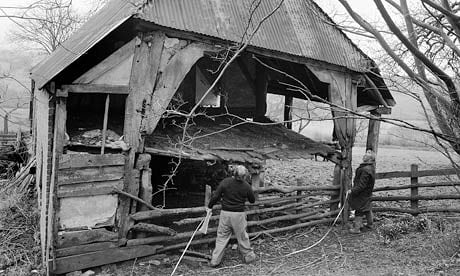
We all knew that he was interested in old Welsh houses and in the holidays he would return to his home village of Llanidloes in Wales. It was only many years later that I met him again at the Society of Antiquaries and discovered that he had indeed been a very distinguished student of Welsh mediaeval houses and had become president of the Cambrian Archaeological Association for whom he had written many papers. We became good friends, indeed better friends than we had been at school when I think I was a bit wary of him.
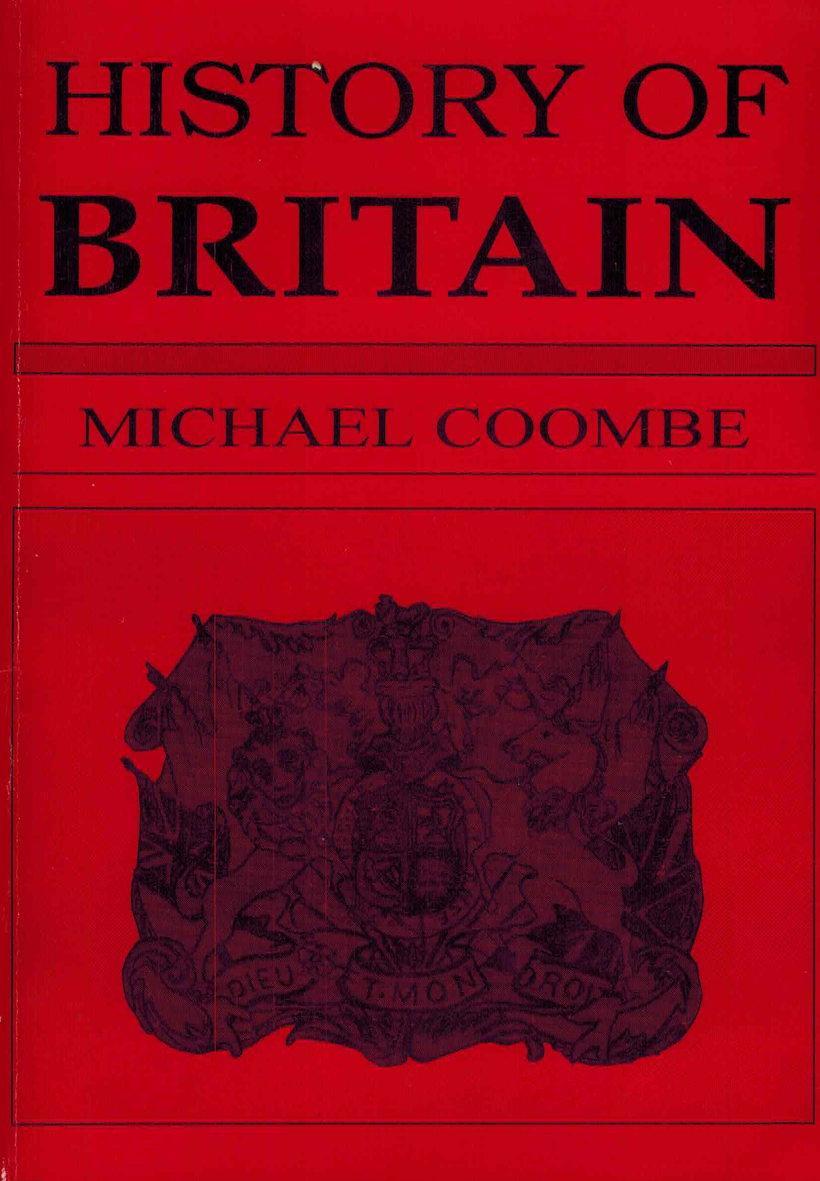 But he taught history very well. Subsequently he went to St Pirins, Maidenhead, where he passed his notes on history to a junior master, Michael Coombs, who published a book based on them. We subsequently met up and he sent me a copy of the book, published by the Excalibur Press. . It was uncanny reading it and finding that I agreed with everything — but then this was a history that I had been taught!
CEVO was a more distinguished historian than I realised. On his death in 1981 his papers were filed with the National Library of Wales: details can be found by googling Cecil Vaughan Owen. The entry has a mini biography giving his dates as 1901 to 1981. He was also High Sheriff of Montgomeryshire in 1971. We were fortunate to have been taught by such a distinguished historian
The only other masters I can remember were Mr Moltino, who taught us maths and Mr Trembath, who was a war hero who had lost both his legs and went around on wooden legs and in a motorised wheelchair. He had clearly been a good sportsman, and supervised sports.

Since then, Akeley Wood has flourished, becoming one of the first schools in the Cognita group of schools, now one of the largest chains of schools in the world. Akeley Wood now thrives on three separate sites, taking pupils up to the age of 18. From its prospectus, it all looks very smart.
David Blackie has contributed the following addendum:
I just came across your memoirs – and I found the page on Akeley Wood. I first went there in 1955 so long after you had left and the picture looked much as I remember the school, and your stories about “Mr Ian”. You should know that Ruth died in about 1957 and he married again – Sybil O’Brien whose son Nigel was more or less a contemporary of mine (and who died in his teens). They retired together to Windermere where I went to see them once with my father, who was a contemporary of Ian’s at Bradfield. I recall that he had a book of memoirs on the shelf which he showed to my father – the pages were all blank.
I made a very short video (60 seconds) from the limited resources I had of Akeley Wood and what I remember, but you might be interested to watch: https://www.youtube.com/watch?v=8WfeVX5D9Qc At least three of the boys in the picture there went to Rugby.
Anyway, very glad to come across your memory of the place.
On to Rugby