 Accountancy
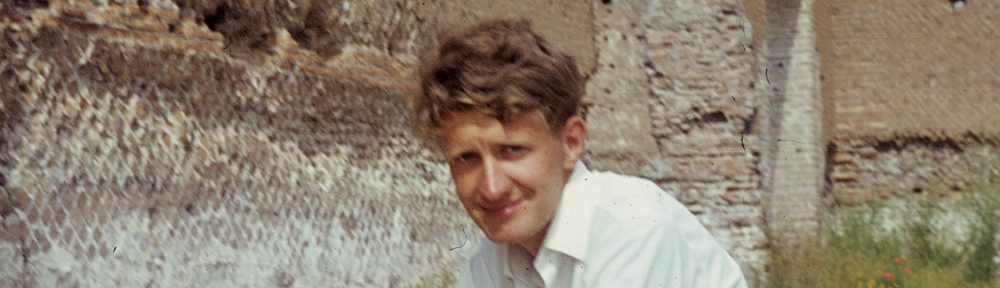
I came to London to study accountancy, and I took up articles with Smith and Williamson. They were a small firm in the city, with offices in Scottish Union house, which was part of the Bucklersbury complex now the Bloomberg site but appropriately overlying the site of the Roman Mithraeum. It was a small but prestigious firm with just six partners in London, though there were a couple more in Glasgow. The senior partner was Talbot Rice, who was a cousin of the Byzantinist Tamara Talbot Rice. He was a dab hand at investment and the firm operated as a small merchant bank with a number of wealthy clients. There was a joke that they made a very good investment with London Rubber, which they told their clients had rubber estates in Malaya, but in fact made their money by producing Durex condoms. I was articled to Donald Biddle, who was the junior partner. I think he had only just arrived from Price Waterhouse and was not much older than I was. He had a light-hearted touch, and proved to be a very good principle and gave me a rounded education.

My best friend there was David Hinton, who has been a friend ever since. Indeed, when in my fortnight’s holiday, I decided to borrow my parents Dormobile and go with my new girlfriend, Wendy to Sicily, we needed a chaperone and David agreed to come, but he had no girlfriend. Then one evening he turned up so I’ve just met a super bird and the super bird turned out to be Jackie who came out with us and the holiday was a great success. We camped in fields most of the time, but they got on very well together, and eventually got married and we went on holiday with them several times with their family, their two daughters Kate and Kirsty. Sadly they later got divorced and Jackie sadly died from cancer.
There were half a dozen other articled clerks. I remember Bobby Shaftoe who was serious but fun and we always teased him: he had the liveliest audit, of Tuffin and Foale, two gorgeous young ladies who were milliners and made hats. Subsequently, Bob set up in partnership with a fellow accountant who was no good, and ran the business into bankruptcy, so Bob became bankrupt and thus lost his membership of the Institute which seemed most unfair. Eventually he became a parson and David remained in contact with him.
Then there was John McCagney who came from Dagenham: his father was I think a worker with Fords, but he stayed with the firm afterwards and became a partner, and thus very posh indeed.
After we left, Smith and Williamson took off and became very successful indeed: it is in effect a very niche merchant bank and is I think number 10 on the list of the largest firms of chartered accountants.
Although the main business of the firm was the investment side, we also did a number of audits, which form the basic training for accountancy. Our biggest audit was Rotary Hoes, otherwise known as Howard Rotavators, who were the biggest manufacturers of muck spreaders in the country and were the only firm we audited who were quoted on the stock exchange. They were at East Horndon out in Essex and I remember some freezing cold winter mornings taking the train out from Liverpool Street.
Learning to do accounts
But the audit I remember best was the audit where I learnt accountancy. This was an audit of a hostel of the YWCA. The YWCA or the Young Women’s Christian Association had nearly 20 hostels around London and we were the auditors. It was an easy audit and we were sent out to them one by one, and were meant to knock them off in a day or possibly two. Well in my second year when I had just taken and passed the intermediate exam, I was sent out by myself to audit the hostel in Gordon Street just round the corner from the Institute of Archaeology in Gordon Square.
I was terrible. Even though I had passed the intermediate exam, I hadn’t a clue. I spent a whole week on the audit, and that is where I learnt how to do accounts. I learnt that you start by getting hold of the bank statements, spend a lot of time ticking the entries off against the cash book, finding that if you take the opening balance at the bank, add in the receipts of the year, take away the outgoings, the result must be the balance at the bank at the end of the year. Get that right, and the rest is simple. I think the matron thought I had found something wrong, but she nobly cooked me lunch every day and when I finally finished, I thanked her for learning accountancy. After that, I knocked off half a dozen other hostels within the day.
Other memorable audits were at the Miles aircraft company at Shoreham by the Sea in Sussex. The owner, F G Miles, had a dodgy past and a glamorous and promiscuous wife called Blossom who was a star aviator with extravagant tastes. I did the audit with David Hinton and we stayed in a hotel in Brighton on the seafront and David was slightly scandalised when I swam in the sea every day before breakfast. We travelled out by train to Shoreham every day, but at the time I was editing Contra, and I was ardently pursuing Wendy, so for a number of weeks I came back to London every night and then got up early to get an early train down from London to Brighton and then from Brighton to Shoreham. It didn’t really take all that much longer because one could get breakfast on the train. But I missed my before-breakfast swims.
And then there was the Australian Paper Mills, a firm that looked after the transfer of paper from Australia to Scandinavia where we handled Bills of Exchange for millions of pounds – essential to make sure that none of them got lost — and one got a particular thrill from handling a piece of paper worth a million pounds. I remember there was one director who seemed an idle good-for-nothing, taking long liquid lunches, taking time off to play golf, but when at the end I audited the director’s salary book, I found he was the best paid director and I realised that he was the ‘hooker’ who actually brought in new business, and was therefore a vital part of the firm. Every firm needs a ‘hooker’ and therefore the long lunches and the golf were an essential part of the job.
But the audit I remember best was the one where I discovered fraud. It was at St Peter’s College, Oxford. St Peter’s was, I suppose at the bottom of the Oxford league of colleges. It had only been founded in 1929, the principal or master was a clergyman who played a big role in Moral Rearmament, a Christian cult which had been big during the war but was rapidly going downhill. But he had no idea how to run a business. They had a very good accountant who had been there for many years and was very efficient and very friendly, but they decided that they wanted a qualified accountant, so he was made redundant and they brought in a qualified accountant who had been with the University Chest and had excellent references. But when I arrived, the accounts were only half prepared, and I soon found there were discrepancies – a dividend from Charifund was missing. When I raised it with him, he denied everything, and said that if I accused him of fraud, he would sue me for libel. There is nothing for it but to creep out into the town and find a telephone box and ring up Donald Biddle and tell him of my suspicions. He came down said let’s check the petty cash which I had already checked — but again there was a discrepancy. My job was then to finish writing up the accounts, and to check them to the last ‘t’– I spent two days chasing up a minor error due to my bad handwriting. But eventually I got them to balance to the last ‘t’ .
It was then a matter of transferring them to the format of the Oxford and Cambridge Universities Act 1923, which was an entirely useless format which concealed what had actually happened in the College. The only don who had his head screwed on was the mathematics don, who had a word with me and I went through the real accounts with him. The real problem was in the summer vacs: the dons always insisted on closing the College for August, though all the staff in the College were married to workers in Morris motors, who took their holidays in July, so consequently the college was closed for July and August. And since it was the summer visitors who provided the profits, the college always made a loss.
Eventually the new accountant was dismissed. I remember going along to the master and saying Have you dismissed him yet? We can’t as auditors continue if we believe the accountant to be fraudulent. He eventually left and I think I acquired certain glory with Smith and Williamson. On the whole I had not been one of their star articled clerks – I always tended to be too slow –but I had discovered what could have been a very damaging fraud.
The Students Society
The other highlight of these years was the Chartered Accountants Student Society of London. All articled clerks in London belonged, more than 10,000 of them, and most of them ignored it. But I began to take an interest. I remember joining the debating society, and it was here that I learnt to debate. I had attended all the debates at Rugby but never dared get to my feet. Similarly at Oxford, I went along to the Oxford Union but never dared to speak. But with the Student’s society, it was different. For one thing, I was much older. Most article clerks did five year articles from the age of 18 to 23; but I had done two years in the Army, four years at Oxford and the year at Birmingham, so I was 26, much older than the rest and I found I had no inhibitions about getting on my feet and contributing to the debate. It was here that I lost my fear of public speaking, which has stood me in good stead ever since.
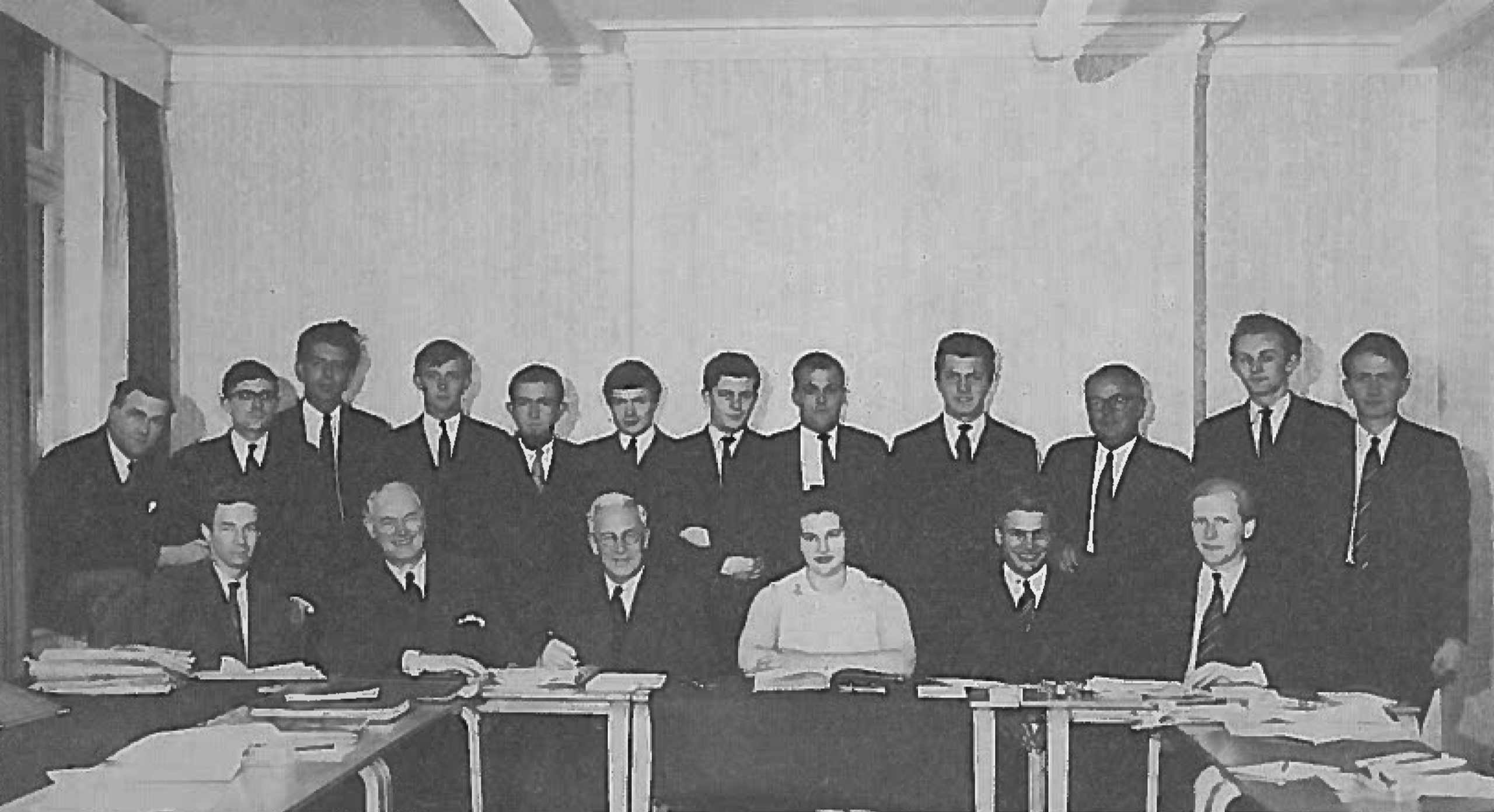
But there is also a magazine Contra, that was distributed to all 10,000 articled clerks. I went along and began to contribute and soon joined the editorial committee. But then I was suddenly promoted. The editor was Jeremy Cripps, an old Etonian, the grandson of the Labour Chancellor, Sir Stafford Cripps, who had gone from left to right and was extremely right-wing in his views, and foolishly, he included in the magazine a leaflet saying “Say no to nationalisation, yes to free enterprise”. This was very foolish. One of the distinguished Chartered Accountants who took an interest in society was Jack Diamond, who was a Labour minister and he went up the wall. Jeremy was ignominiously ejected and I was made editor.
I had found my niche. I edited two issues of the magazine: for the first I had a spectacular front cover in pink of a new building. It’s still there at the top of Tottenham Court Road (Euston Tower). I wrote several articles of which I remember my attempt as a film critic, with an article on the films of Ingmar Bergman.
But my big triumph was the second where I had a poor front cover but spent a lot of time compiling the first top 20 list of chartered accountants. With the help of my wonderful girlfriend, I got hold of the Stock Exchange Yearbook which listed the auditors of every company – all 5000 of them — and we recorded them all on record cards and then sorted them into order to produce the top 20 — actually I think we published nearly the top 100. It wasn’t perfect. One of the biggest firms was Arthur Andersen, an American firm, which only audited one company on the British stock exchange, which was the Ford Motor Company, and didn’t therefore make it into my list, — and subsequently went spectacularly bust. But my list was a great achievement and went down well and it means that I still have a very good knowledge of the names of chartered accounting firms as they were in 1964.
But since it was an accounting magazine, the editor was meant to do the entire running of it —arranging the printers, seeing they got paid, — all the business side, so I got to know not only how to edit a magazine, but also how to publish it, and I began to think that I might become a journalist rather than an accountant. And then one day, the wonderful idea came to my head, that perhaps I should set up an archaeological magazine…
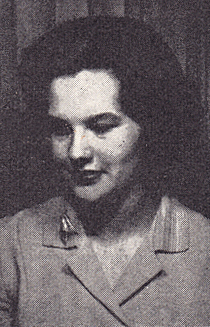 But I learnt a lot from the CASSL The manager was Derek du Pré, who was the father of Jacqueline du Pré the cellist, so he knew how to encourage talent, and was extremely helpful. The chairman of the society was Clive Parritt, who went on to run Baker Tilley, — one of those firms just below the big four and to become President of the Institute. And then there was Eirwen Hattley, the only girl on the committee. She was a well built lady, who got on well with all the members of the committee. I went down with her to Bristol when the Bristol Society invited two members of our society down to their dinner dance.
8th April 2020